Do Radon Levels Rise in Winter? What Northeast Ohio Homeowners Should Know
Homeowners often hear that radon is a “winter problem,” especially in Northeast Ohio. There is some truth behind the concern, but the useful answer is more precise: radon levels can change from day to day and from season to season, and winter conditions can influence how soil gas moves into a home. The only way to know the level in your house is to test it.
The U.S. EPA specifically notes that radon levels vary over time. That is one reason a short-term test and a long-term test answer slightly different questions. A short test gives you a snapshot under the test conditions; a long-term test is more likely to represent the year-round average.
Why Can Radon Change With the Seasons?
Radon is produced naturally in soil and rock. The concentration indoors is affected by how much radon-containing soil gas is available and how air moves between the ground, the foundation, and the building.
Seasonal weather can change that movement. During cold weather, warm indoor air rises and leaves the upper parts of a house. That can contribute to lower pressure in the basement or lowest level, which may pull more soil gas through openings in the foundation. Homeowners commonly hear this described as the stack effect.
Weather also changes soil moisture, ground conditions, ventilation habits, and how often doors and windows are open. These factors can influence test results. But they do not produce the exact same pattern in every house.
Does Radon Always Peak in Winter?
No. It is reasonable to expect seasonal variation, but you should not assume that your highest reading will always occur in a particular month. Foundation construction, soil conditions, drainage, HVAC operation, weather, and occupant behavior can all influence the concentration indoors.
EPA guidance says that because radon varies from day to day and season to season, a short-term measurement is less likely than a long-term test to represent the year-round average. That is different from saying a winter test is invalid. A properly conducted winter test can provide useful information about conditions in the home during that period.
Short-Term vs. Long-Term Radon Testing
Short-term tests are commonly used when homeowners need an answer quickly. Depending on the device, a short-term test may run from a few days to several weeks. Real-estate transactions often use shorter testing periods because buyers and sellers are working within a contract timeline.
Long-term tests remain in the home for more than 90 days and are more representative of the average concentration over changing weather and operating conditions.
- Short-term test: useful for a timely decision and commonly used during home sales.
- Long-term test: useful when you want a better estimate of the year-round average and have time to collect it.
- Post-mitigation test: measures the indoor level after a mitigation system has been installed and is operating.
What If My Winter Result Is Higher Than My Summer Result?
Different results do not automatically mean one of the tests was wrong. Seasonal and day-to-day variation is expected. Start by comparing the test type, duration, location, and conditions.
If one result is elevated, do not average away an important finding without understanding the testing protocol. EPA guidance provides specific follow-up strategies depending on whether the result came from a short-term, long-term, or real-estate test. When in doubt, a qualified radon professional can help you determine whether another measurement is appropriate or whether it is time to evaluate mitigation.
What If the Home Already Has a Radon System?
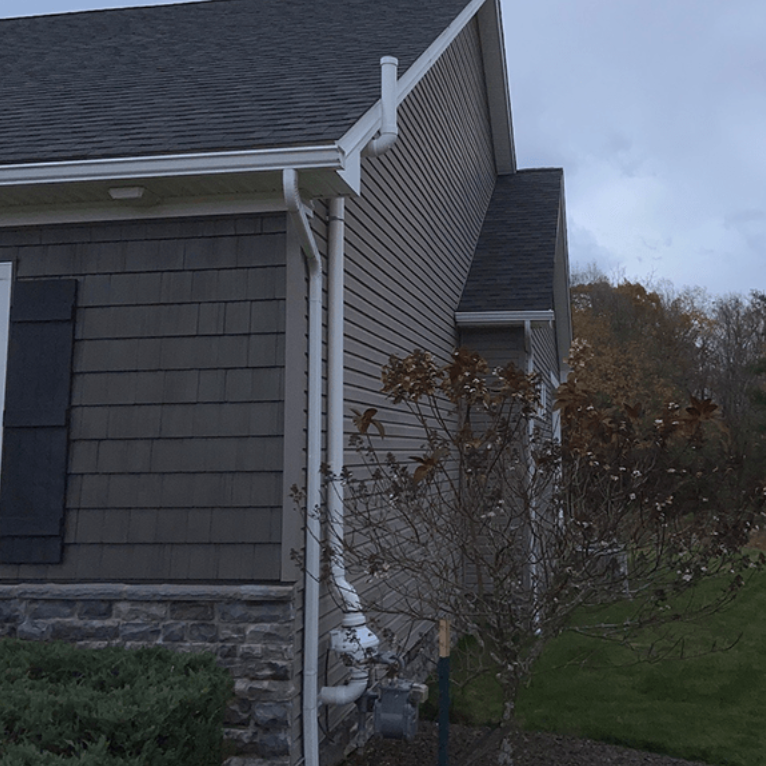
A mitigation system should operate continuously unless the system manufacturer or qualified professional instructs otherwise. The system is designed to maintain negative pressure beneath the home and redirect radon-containing soil gas outdoors before it enters the living space.
SharpShooter installs a system monitor so homeowners can verify that the fan is creating suction. The monitor is not a radon meter; it tells you whether the pressure-generating equipment is operating. Periodic radon testing is still the way to measure the indoor concentration.
Learn more about how these systems are designed on the single-family radon mitigation page.
Why Northeast Ohio Homes Need Property-Specific Testing
Northeast Ohio contains a wide variety of housing and foundation conditions: older basements, newer poured-concrete foundations, block walls, sump systems, additions, slab sections, crawl spaces, and finished lower levels. Those differences can affect where soil gas enters and how pressure moves beneath the structure.
Regional radon maps are useful for understanding potential, but they cannot predict the level in an individual house. The EPA advises testing homes regardless of the map zone. SharpShooter serves homeowners throughout the region, including Summit County and Medina County.
When Should You Retest?
Retesting can be useful when a previous result is old, when you begin using a lower level of the home more frequently, after significant renovations, or when you want to check conditions after a mitigation system has been installed.
If you are buying or selling, a buyer may request a new test when the previous measurement is not recent or when the home has changed since the earlier test. For homeowners who simply want a better understanding of long-term exposure, a longer-duration test can help smooth out some of the short-term variation.
Frequently Asked Questions
Is winter a good time to test for radon?
Yes, provided the test is conducted according to the device instructions and applicable testing protocol. Winter results can be useful, but remember that radon varies over time and a short-term result is a snapshot rather than a guaranteed year-round average.
Should I open windows if my radon reading is high?
Opening windows can temporarily change indoor air and pressure conditions, but it is not a dependable long-term radon solution. If a valid test shows an elevated concentration, evaluate the home for a properly designed mitigation system.
Can weather make two tests look very different?
Yes. Weather and seasonal conditions are among the reasons radon can vary. Compare the testing method and conditions, and use appropriate follow-up testing or professional guidance rather than assuming one result should be ignored.
Do I need to shut off my radon fan in warmer months?
No. Active mitigation systems are intended to maintain the pressure relationship beneath the home continuously. If you have concerns about your fan or monitor, contact a qualified radon professional rather than turning the system off.
Use Testing to Make the Decision
Seasonal patterns are useful context, but they should not replace a measurement in your own home. If your Northeast Ohio radon test is elevated, SharpShooter can evaluate the foundation, perform diagnostic testing, and design a mitigation system for the property rather than relying on assumptions about the season.
Recent Posts